Interventional Biopsy Procedures at Zwanger-Pesiri
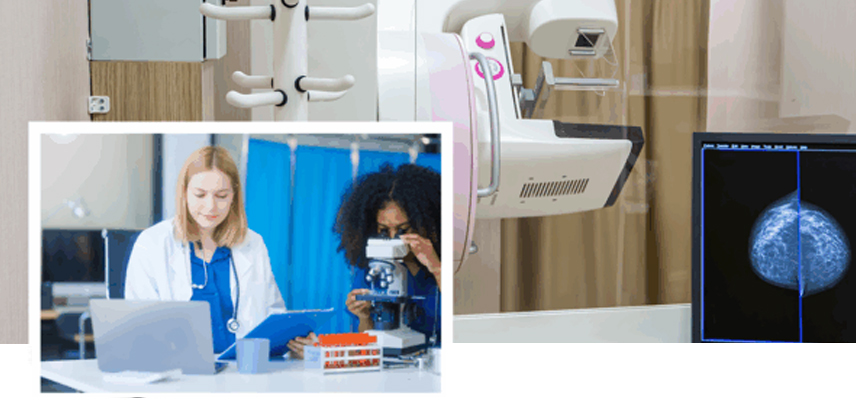
A biopsy is a diagnostic procedure in which a sample of living tissue is removed with a tiny needle to be examined by a pathologist, a doctor specially trained in tissue identification. The sample of tissue is usually examined under a microscope to determine if it is healthy or if it shows any kind of disease or abnormality.
In many cases, the use of medical imaging such as MRI, mammography, ultrasound, and CT is used to guide the doctor in performing the biopsy to help pinpoint the tissue, organ or bone under observation. We provide biopsy procedures for a number of organs including breast, liver, and thyroid.
Click here to learn more about a breast biopsy.
A Biopsy Overview
A biopsy is a diagnostic procedure in which a sample of living tissue is removed with a tiny needle to be examined by a pathologist, a doctor specially trained in tissue identification. The sample of tissue is usually examined under a microscope to determine if it is healthy or if it shows any kind of disease or abnormality.
Different types of Biopsy procedures
Fine Needle Aspiration Biopsy
A fine needle aspiration biopsy is the simplest biopsy. It uses an extremely thin needle – thinner than the ones used for blood tests. Because the needle is so fine, this procedure is relatively painless. The physician inserts the needle into the lump and draws out fluid or a tissue sample. If clear fluid comes out, the lump is more likely to be a benign cyst rather than cancer. A pathologist will examine the fluid or tissue sample under a microscope to determine if cancer is present.
Core Needle Biopsy
A core needle biopsy uses a somewhat larger, hollow needle to remove tiny cylinders (cores) of tissue from the suspicious area. Core needle biopsies usually require a local anesthetic for your comfort. The needle is inserted a few times to obtain samples. While this procedure takes longer than a fine needle aspiration biopsy, it is more likely to give a definitive result because more samples of tissue were checked.

Definitive Results
Offers the most accurate diagnosis option
Advanced Systems
Guided by the latest imaging technology
Expert Care
Interventional specialist radiologistsBiopsies are performed in many areas of the body and for many reasons. Some of those areas and reasons include:
- Breast Biopsy - A breast biopsy is used to remove a small sample of breast tissue to determine whether an abnormal finding is benign or cancerous. It helps guide accurate diagnosis and appropriate treatment planning. Learn more.
- Abdominal Biopsy - Used to diagnose whether a lump in the abdomen is cancerous or benign. The lumps can be located in the fat, deep within the abdomen.
- Bone Biopsy - Used to diagnose cancer or infection in the bones.
- Liver Biopsy - Used to diagnose diseases of the liver, such as hepatitis, C, cirrhosis, infections, and cancer.
- Do not take aspirin, ibuprofen, Advil, Motrin, or Aleve for one week prior to your appointment.
- If you take Coumadin, Plavix, or any other blood thinners, you must get approval from your doctor to stop the medication one week prior to your biopsy.
- Avoid fish oil and high doses of vitamins (except for prenatal vitamins).